The open-source 8th Wall alternative.
Native AR and VR from one codebase.
8th Wall hosted projects go offline on 28 February 2027. ReactVision is the open-source migration path: rebuild your scenes in a browser-based editor your team already knows, then ship them as native AR on iOS and Android and as native VR on Meta Quest, all from one codebase.
The clock is running
Editor closed
8th Wall edit access ended. New accounts and exports closed.
Hosted projects still running
Live URLs and QR codes still resolve. Campaigns work, but cannot be modified.
Hard stop
Hosting decommissioned. Every 8th Wall URL goes dark. Project data deleted.
What makes a good 8th Wall alternative
Teams looking at 8th Wall alternatives are usually weighing three things: whether the renderer is open source, whether the authoring story matches what 8th Wall Studio offered, and whether the platform supports both AR and VR from one codebase. ReactVision answers all three.
8th Wall, WebAR via the browser
A JavaScript engine running on a Canvas inside a mobile browser. Distribution via URL or QR code, no install. Strong creative tooling, but the rendering ceiling, performance, and persistent-user options are bound by what mobile browsers allow.
ReactVision, native AR & VR via ViroReact
True native rendering through ARKit and ARCore via the MIT-licensed ViroReact library. Higher fidelity, native performance, and the same open-source renderer covers AR and VR, phones, tablets, and Quest headsets from a single codebase.
Design in Studio. Ship via ViroReact.
Keep the browser-based authoring story, drop the browser-runtime ceiling. Build the scene visually in ReactVision Studio, then bring it into a React Native app via ViroReact and ship it native. New to the stack? Start with the React Native AR guide.
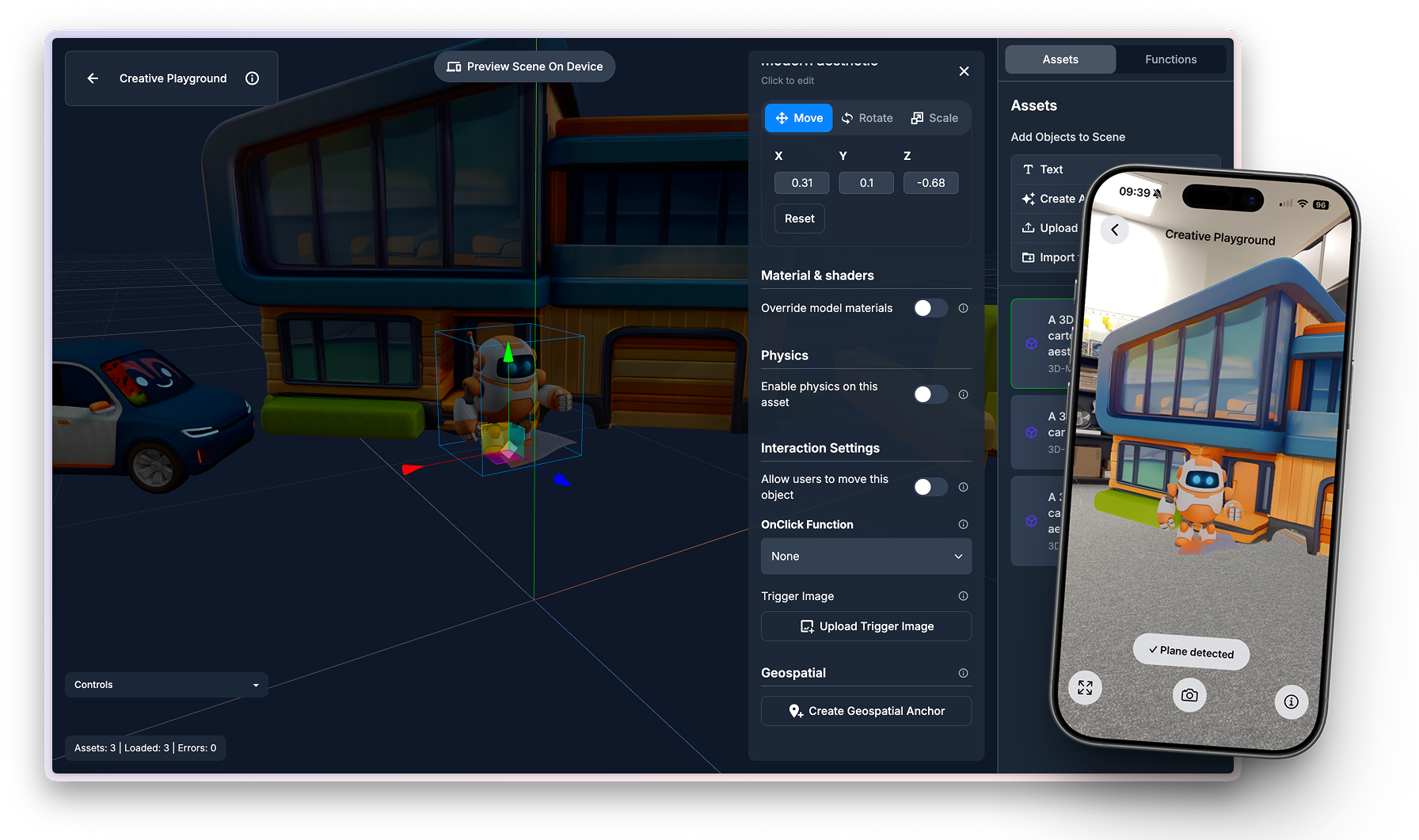
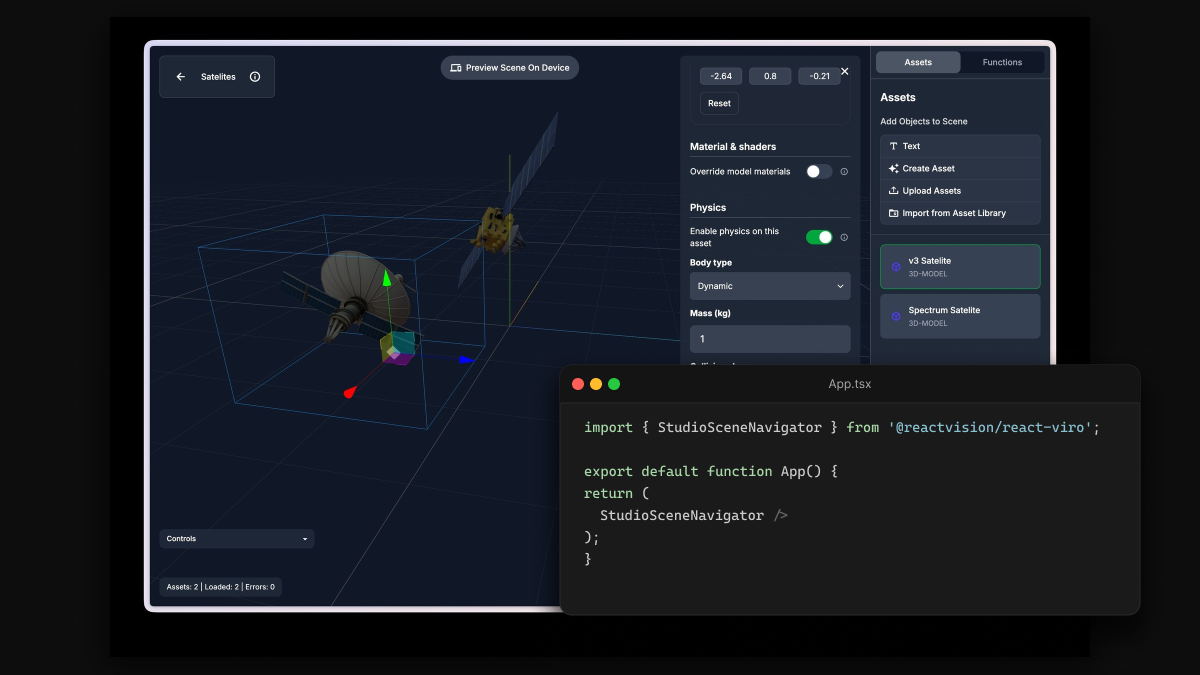
Scene editor for AR, VR, and XR
Browser-based, drag-and-drop scene composition that compiles to native AR on iOS and Android, and to VR on a Quest headset.
3D asset generation built in
Generate 3D assets directly from the editor, no separate Asset Lab to round-trip through.
Animations, physics, and shaders
Configure animation timelines, physics bodies, and custom shaders inside the editor, with presets to start from.
StudioGo for live device preview
Preview the scene on a real phone over the air while editing. No build required.
From idea to XR scene with the Studio AI agent
Migration does not have to mean rebuilding every scene by hand. Describe the experience you want and Studio's built-in AI agent creates scenes, generates and places assets, wires up physics, animation, and triggers, and sets geospatial anchors, all inside your project. Point it at what an 8th Wall campaign used to do, and go from idea to a functioning XR scene quicker than ever.
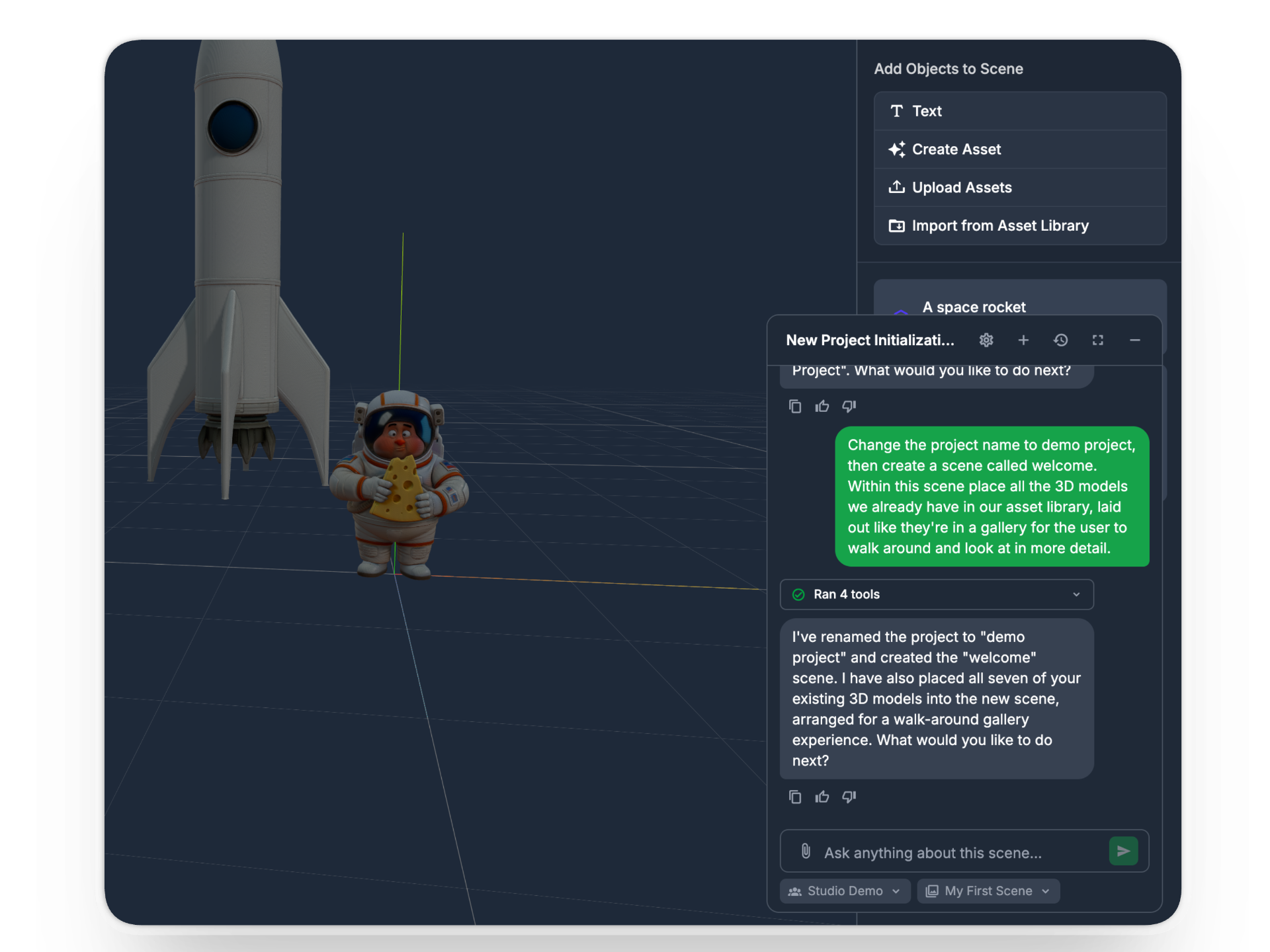
Recreate scenes from a prompt
Hand the agent the project admin: spinning up scenes, pulling in or generating assets, and placing them where they belong, so the groundwork is done before you start refining.
You stay in control
Nothing destructive or billable happens without a yes. The agent confirms before it deletes anything or runs a paid AI generation, so you approve the change and the credit cost first.
Feature parity, line by line
The capabilities you used most in 8th Wall, and where they live in ReactVision. Honest about what is a one-to-one swap, what is an upgrade, and what is a different model.
| Capability | 8th Wall | ReactVision |
|---|---|---|
| Visual scene editor | 8th Wall Studio | ReactVision Studio |
| Image target tracking | Image Targets | ViroARImageMarker |
| Surface / plane detection | World Tracking | ViroARPlane (ARKit / ARCore) |
| Geolocation AR | VPS / Lightship | Geospatial AR via Platform |
| Multi-user shared AR | Shared AR | Cloud Anchors via Platform |
| Face tracking | Face Effects | ARFaceTrack (iOS) |
| Distribution | URL / QR (no install) | App Store / Play Store / sideload |
| Renderer licence | Closed source (post-shutdown) | MIT, open source |
| Headset / VR target | Not supported | Meta Quest (HorizonOS), Apple Vision Pro (visionOS) |
What you gain, what changes
8th Wall was URL-distributed, no install required. ReactVision builds AR inside a React Native app you ship to the App Store and Play Store. Different reach profile, different fidelity ceiling.
What you gain
- +Native rendering performance via ARKit and ARCore
- +Higher visual fidelity ceiling than a browser canvas
- +Access to the platform's full sensor and AR capability set
- +Persistent users via an installed app, push, analytics, login
- +A single codebase that also targets HorizonOS and visionOS (Android XR coming soon)
- +An MIT-licensed renderer no vendor can take away
What changes
- →Distribution shifts from URL to app, App Store review applies
- →First-time users install the app, where 8th Wall opened in a tap
- →QR codes work via deeplinks into the app, not directly into a URL
- →iOS and Android require a development build, not Expo Go
- →AR features require a physical device, no simulator
How a migration actually runs
The path from a frozen 8th Wall project to a working ReactVision app. We have walked teams through this, happy to do it again.
Audit your portfolio
List every active 8th Wall project and QR code in market, mark what goes dark on 28 Feb 2027, and prioritise by commercial impact.
Recover your assets
Pull 3D models, textures, target images, and copy from any local exports made before 28 Feb 2026. ViroReact accepts OBJ, FBX, and glTF/GLB.
Rebuild scenes in Studio
Reconstruct each scene visually in ReactVision Studio. Image targets, plane anchors, animations, and interaction logic, no code for the parts that did not need it.
Wire it into a Viro app
Embed Studio scenes inside a React Native app via ViroReact. If you need a fresh shell, the Starter Kit gets you to a running build in an afternoon.
Redirect QR codes
Dynamic QR codes redirect to the new app deeplink with no reprint. Static codes get reissued, we help sequence the transition.
Ship and verify on device
Test live on a phone via StudioGo while editing. Submit to the App Store and Play Store when signed off. AR features need a physical device.
Get started
Self-serve, start in Studio today
Sign up for ReactVision Studio and start rebuilding your first scene in the browser. The editor is free to try and the ViroReact renderer is open source.
With our help, talk to the migration team
Bring a list of active 8th Wall projects, or one example. We return a scoped migration plan: assets, timeline, what gets handled in Studio, what needs code, and what goes through the App Store.
The stack underneath
Renderer, ViroReact
MIT-licensed, native AR & VR via React Native.
Platform, ReactVision Platform
Managed Cloud Anchors, Geospatial AR, AI 3D asset generation, and Asset Hosting with over-the-air content updates. Drop in an rvApiKey.
Editor, ReactVision Studio
Browser-based scene editor. The 8th Wall Studio workflow, on a renderer that ships native.
Related comparisons and guides
- Unity alternative for AR and VR →
- Unreal Engine alternative for AR and VR apps →
- Niantic Lightship alternative →
- Open-source Unity and Unreal alternative →
- Best AR/VR/XR tool for React Native →
- Can AI agents build AR and VR apps? →
- Geospatial AR without Niantic →
- One codebase for AR on phones and VR on Quest →
- XR CMS: update content without an app release →
- React Native AR guide →
Don't let your campaigns go dark in February
February 2027 is closer than it looks. The time to start is now, while there is room to test, validate, and switch QR codes without pressure.