The latest from ReactVision
Releases, tutorials, and stories from the team: ViroReact, ReactVision Spatial, the Editor, and MCP, straight from the people building them.
HoloLens 2 Is Ending: The Best HoloLens Alternatives
HoloLens 2 is discontinued and its key apps reach end of support this year. What HoloLens got right, why moving on is no bad thing, the hardware options today, and how to avoid getting locked in again.
Eskiu GPU: How Our Own Language Cut Scan Processing From 15 Minutes to 6
Eskiu GPU is the GPU layer for Eskiu, our in-house systems language. Here's what it does, how it benchmarks, and how it cut Advanced VPS scan processing from around 15 minutes to 6.
ReactVision Studio 1.5.0: Client and Secret API Keys
API keys now come in two types: client keys that ship inside your app and reach one project, and secret keys that stay on your backend. Your existing keys keep working, and the ReactVision API has a public reference.
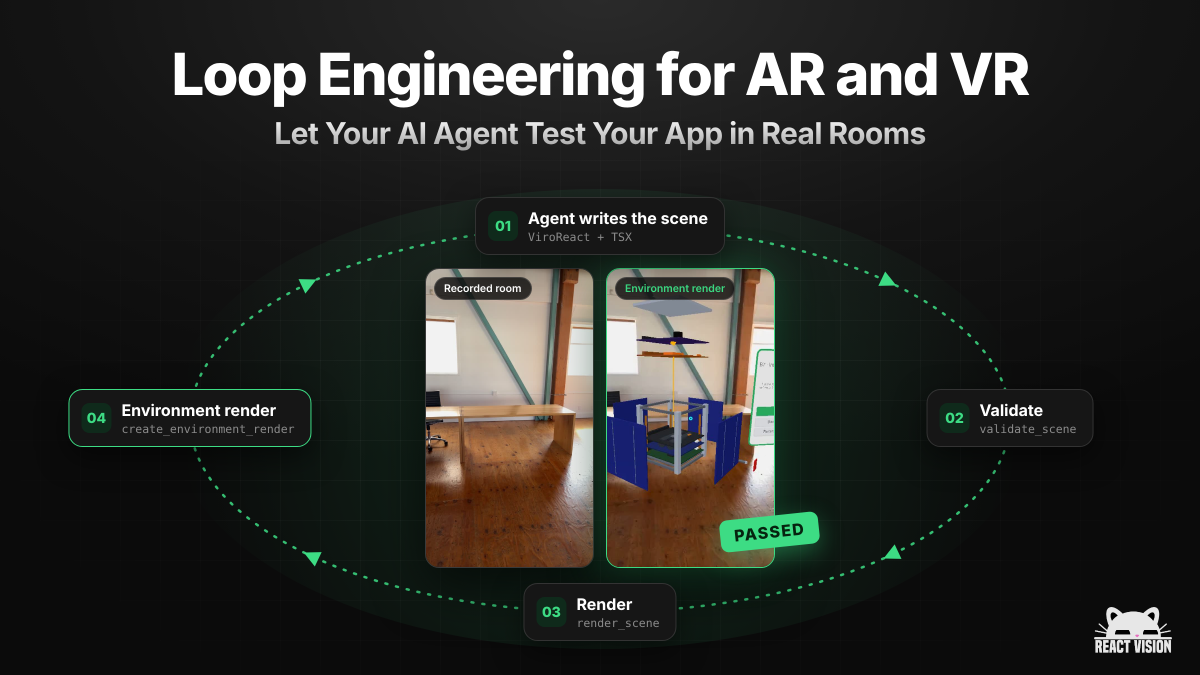
Loop Engineering for AR and VR: Let Your AI Agent Test Your App in Real Rooms
Environment testing lets your AI coding agent render your AR scene inside a real room you recorded, so it can test its own work with no device and no site visit. Here is what it is, why it matters for agentic coding loops, and how to set it up in minutes.
One Codebase for AR on Phones and VR on Headsets: Cross-Platform XR in 2026
How to build one app that runs as AR on iPhone and Android and as VR or mixed reality on Meta Quest and Apple Vision Pro, comparing Unity, WebXR and ViroReact, with the React Native pattern that makes it one codebase.
AR and VR MCP Servers Compared: Which One Should Your Coding Agent Use?
A comparison of the MCP servers that help AI coding agents build AR and VR apps in 2026, including SceneView MCP, Meta's Quest developer MCP, Unity and Blender bridges, and the ReactVision MCP server.
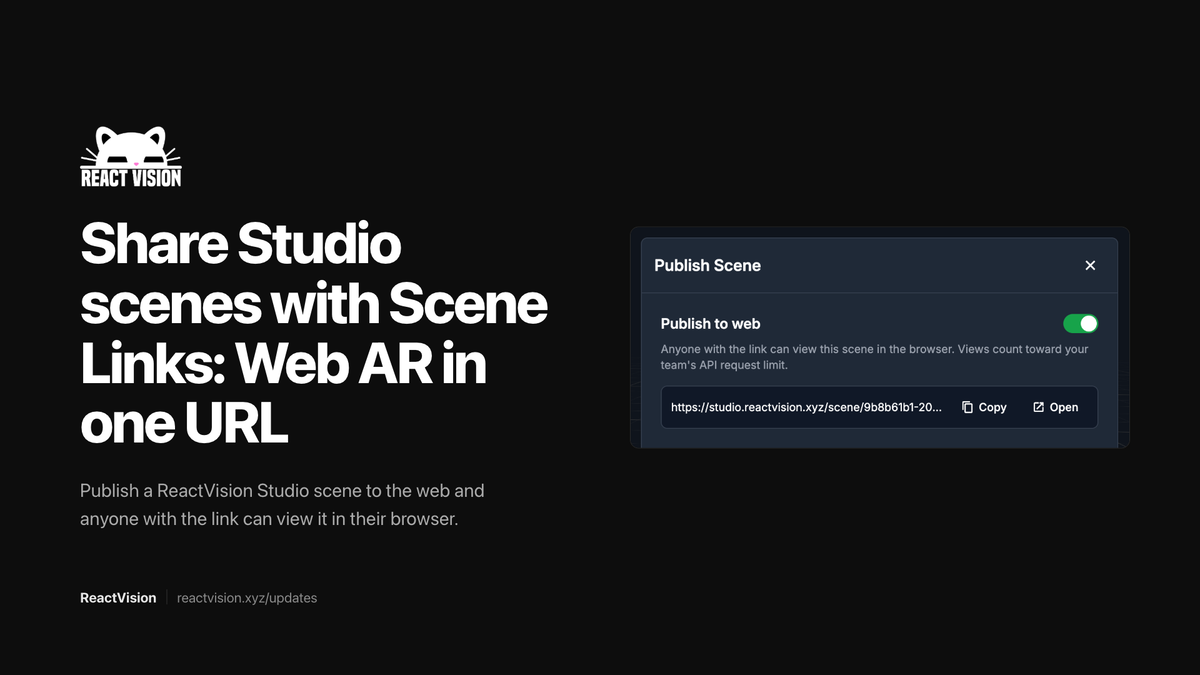
Share Studio scenes with Scene Links: Web AR in one URL
Publish a Studio scene, share a URL, and open it as Web AR in the browser. When to use Scene Links versus native ViroReact, and how both paths share the same Studio work.
How to Build for Apple Vision Pro Without a Unity Pro Subscription
Your options for building Apple Vision Pro apps in 2026: native SwiftUI and RealityKit, Unity PolySpatial (which needs a paid Unity plan), and ViroReact for React Native teams who want the same codebase on phones and Quest.

How to Build a VR App for Meta Quest in 2026
How to build a VR and mixed reality app for Meta Quest 3, 3S and Pro in 2026: Unity, Unreal, Meta Spatial SDK, WebXR and ViroReact compared, plus a step-by-step React Native path that also ships to phones.
How to Build an AR App for iPhone and Android in 2026
A practical guide to building a native augmented reality app for iPhone and Android in 2026: the options (ARKit, ARCore, Unity AR Foundation, WebXR, ViroReact), how to choose, and a step-by-step start with React Native and an AI coding agent.
Getting started with visionOS and ViroReact
A practical Expo-only walkthrough for running ViroReact on Apple Vision Pro: plugins, the visionos folder, ViroXRSceneNavigator, pinch input, immersion styles, and the known limitations to expect.
Ctrl+Space: Meet the Winners and Finalists of the Expo x ReactVision Hackathon
Six AR and VR apps, built in React Native in one week. Meet the winners and finalists of Ctrl+Space, the Expo x ReactVision hackathon, from a portal-based city game in Rabat to multiplayer robot boxing on your kitchen table.