Build the XR products that define what comes next
Pokémon Go and Snapchat showed what spatial apps can be. ReactVision gives startups the whole AR and VR stack to go further, built for your coding agent and free to start.
ViroReact installs in 2025, the most widely used open-source AR and VR library for React Native.
iOS, Android, Meta Quest, Apple Vision Pro, and the web, from one codebase.
Free tier, no card. MIT renderer with no runtime fees or royalties, ever.
What is ReactVision for startups?
ReactVision is the XR development stack for startups building in AR, VR and mixed reality. One team, or one founder and a coding agent, gets the open-source ViroReact renderer, managed spatial infrastructure on ReactVision Spatial, a visual Editor and an MCP server, and ships one codebase to iPhone, Android, Meta Quest, Apple Vision Pro and the web, from a free tier.
Aim past the obvious
The first wave of spatial apps put a creature on a pavement and a filter on a face. The next wave is yours to define. Every idea below runs on capabilities that ship today.
Persistent worlds
A layer of content over the real world that stays where players leave it, grows over time and is shared by everyone who passes through.
Cloud Anchors, Geospatial Anchors, asset hosting
Multiplayer mixed reality
Several people in one room, on headsets and phones, seeing and changing the same scene at the same moment.
Co-Location, replicated state, Meta Quest and Vision Pro
Location-based games and drops
City-scale hunts, collectibles and events pinned to real places, with new content shipped over the air.
Geospatial Anchors, OTA content updates
AI-native creation tools
Apps where users describe a thing and place it in their world seconds later, with generated 3D models and images.
AI asset generation, asset hosting
Apps that understand the room
Products that recognise objects, read surfaces and depth, and react to what is actually around the user.
Object detection, depth, surface understanding
Spatial commerce
Try-before-you-buy, product visualisation and brand activations that run on the phone people already carry.
ViroReact rendering, Cloud Anchors, asset hosting
Why startups build on ReactVision
Ambition is cheap. Shipping it is what usually takes a big XR team and a backend. ReactVision takes both off your plate.
A small team ships like a big one
Your coding agent builds with current ViroReact APIs through the ReactVision MCP server, then validates and render-tests its own scenes, so one engineer can cover what used to take an XR team.
No backend to build
Anchors, co-location, replicated state, asset hosting and generation run on ReactVision Spatial. Spend your runway on the product, not on spatial infrastructure.
Every device from day one
Start on iPhone and Android, add Meta Quest and Apple Vision Pro when you are ready, from the same React Native codebase.
Iterate without app review
Push new scenes and 3D content over the air, and let designers update scenes in the Editor without an engineering release.
No engine lock-in or royalties
ViroReact is MIT licensed and free forever, with no runtime fees and no revenue share, so success never raises your rendering bill.
Room to grow into enterprise
When bigger customers arrive, the same stack offers custom Enterprise plans, a dedicated ReactVision Spatial instance, on-premises deployment, SSO and audit logging.
From first prompt to first users
The same stack takes you from a weekend prototype to a product with enterprise customers, without a rewrite along the way.
Prototype with your agent
Connect the MCP server, describe the experience, and let your agent build, validate and render-test the first scenes, or lay them out in the Editor.
Put it in people's hands
Preview on a real device with StudioGo, then ship a development build of your React Native app to testers on phones and headsets.
Launch and scale
Go live on the free tier, upgrade as usage grows, and move to a custom Enterprise plan or a dedicated Spatial instance when demand calls for it.
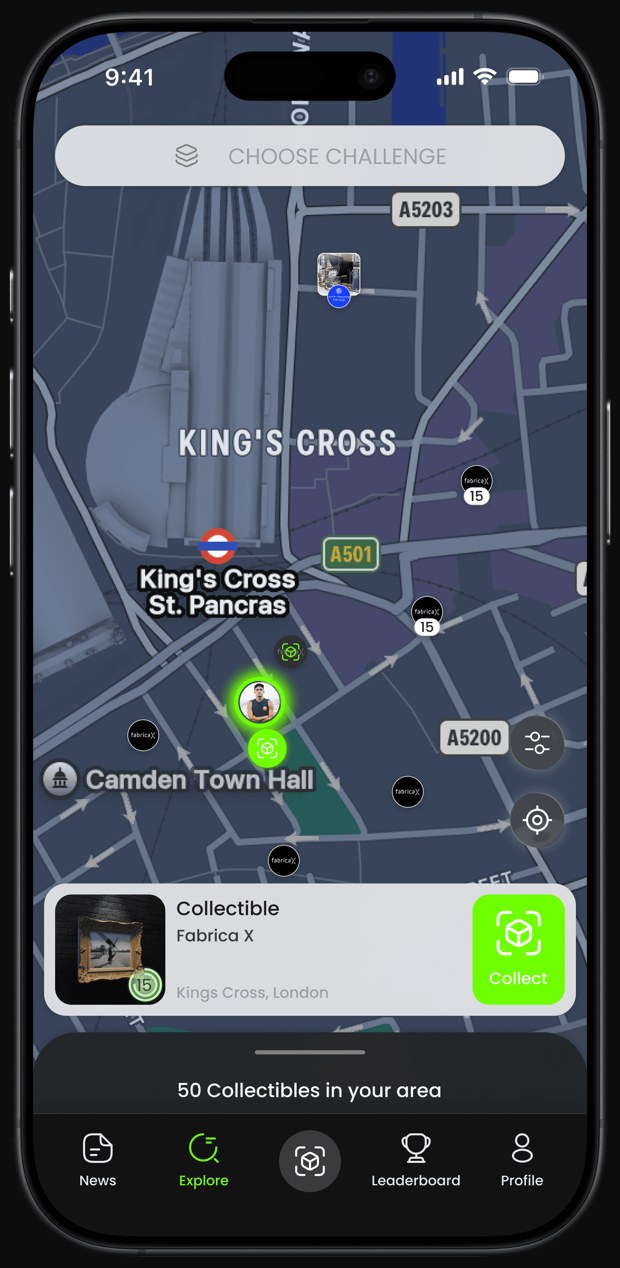
Built on ReactVision: Pikd
Toch Emuwa’s team built Pikd, a gamified, location-based AR platform, and shipped it to iOS and Android from one ViroReact codebase. It has landed brands including Red Bull and Burger King.
The stack underneath
ReactVision builds every layer, from the renderer to the spatial infrastructure, which is why agents build better on it.
MCP
Your coding agent's access to the whole stack: live APIs and docs, platform checks, asset generation, validation and render testing.
ViroReact
The MIT-licensed renderer, powered by ViroCore. Native on every device, free forever, every line on GitHub.
ReactVision Spatial
Managed anchors, co-location, replicated state, VPS, asset hosting and AI asset generation. Free tier, then usage-based.
The Editor
Build and update scenes visually or with the built-in AI agent, and convert them to code and back.
Start free, scale when it works
No card to start. Upgrade when you have users, and talk to us about a custom plan when demand outgrows Pro.
Free
- 500 MB asset hosting
- 1,000 Spatial API requests / mo
- 350 AI credits / mo
- MCP server, Editor, and ViroReact
- Powered by ReactVision watermark
- No Environment Testing
Basic
- 1 GB asset hosting
- 10,000 Spatial API requests / mo
- 1,000 AI credits / mo
- No watermark
- Environment Testing
- Everything in Free
Pro
- 5 GB asset hosting
- 100,000 Spatial API requests / mo
- 2,500 AI credits / mo
- No watermark
- Environment Testing
- Everything in Basic
Enterprise
- Custom limits for high-demand projects
- Option of a dedicated ReactVision Spatial instance
- Managed cloud or on-premises
- Custom hardware via ViroCore
- No device or vendor lock-in
- SSO and audit logging
- Direct support from the ReactVision team
- Everything in Pro
Startup questions
What can a startup build with ReactVision?
Can I build a location-based game like Pokémon Go with ReactVision?
Does ReactVision support VR and headsets, or only mobile AR?
Do startups need to build their own backend to use ReactVision?
How much does ReactVision cost for a startup?
Can my AI coding agent build a ReactVision app?
Build what comes next
Create a free account, connect your coding agent, and have your first scene running today. Building something big? Tell us about it.