How Amakin Built a Winning AR City Game in Rabat with ViroReact
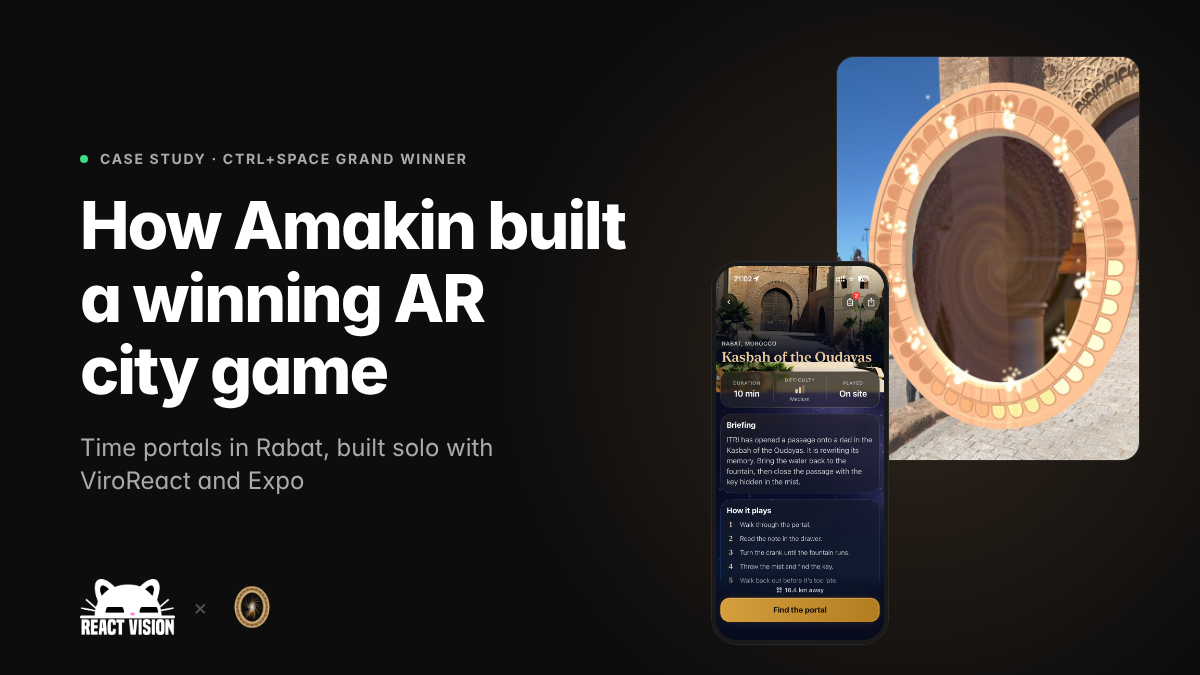
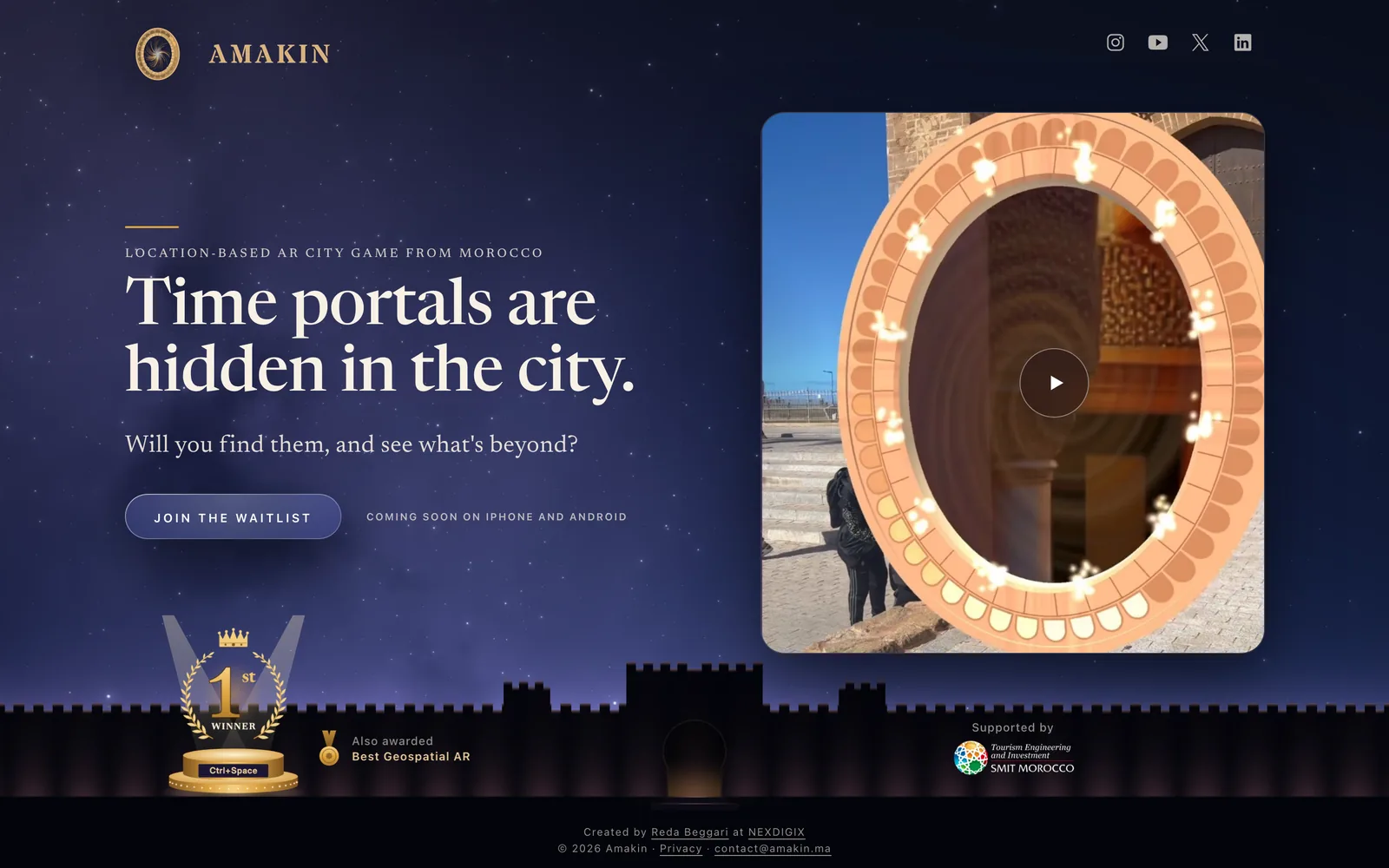
Reda Beggari had one week, one phone and one idea: turn his city into a game. The result was Amakin: City Game, a location-based AR game that opens time portals at Rabat's landmarks. It won the Grand Winner prize and the Best Geospatial AR award at Ctrl+Space, the hackathon run by ReactVision and Expo. Here is how a solo developer used ViroReact and Expo to build something the judges called "polished and near releasable".
Who is behind Amakin?
Reda is an entrepreneur and software engineer from Rabat, with more than 14 years of building software in Morocco and France. He founded his company, NEXDIGIX, to offer AI and software consulting, "but above all to build something of my own."
"Making a game is a childhood dream," he says. "A game is more than an app. It's a work of art, made of a story, visuals, sound, and a piece of yourself."

Ctrl+Space came at the right moment. "It was the perfect reason to create a new game at the Kasbah of the Oudayas, with a brand-new codebase," Reda says. "As the rules ask, my entry disclosed what came before."
Amakin brings tourism, gaming and culture together in Morocco, Africa's most visited country in 2025, with nearly 20 million visitors that year and continued growth in 2026. "SMIT Morocco (Tourism Engineering and Investment) believed in the project and chose to support it," he adds.
The challenge: making heritage something you live
Rabat packs two thousand years of history into a few kilometres: the ancient ruins of the Chellah, the Kasbah of the Oudayas, the Hassan Tower and the medina, all part of a UNESCO World Heritage Site since 2012. Reda wanted people to experience those places, not just read about them.
"A guidebook tells you about a place; a game gives you a reason to go there, and to come back," he explains. "People protect what they love, and they love what they have lived."
That meant the game had to happen in the real city. "Most games ask you to look away from the world; Amakin asks you to look at it." It also had to be built fast, by one person, during the Ctrl+Space build week.
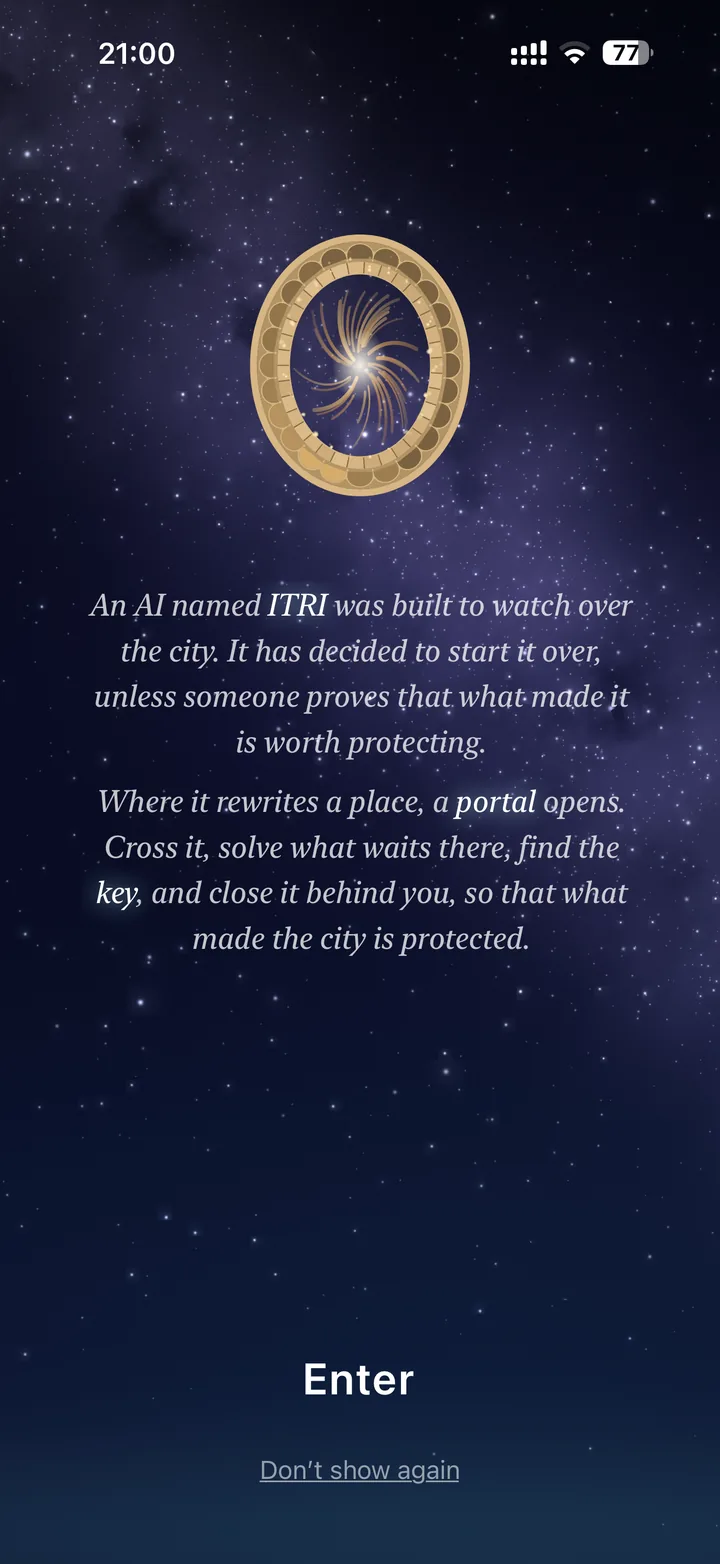
The solution: portals, 360° worlds and physics with ViroReact
Amakin turns the city into an adventure played on foot. Time portals open at landmarks and meaningful places, and crossing one reveals the heritage behind it. It is built for locals who want to see their city with new eyes and for visitors who want more than a tour.
The core came together quickly. "It started with a portal and a 360° scene," Reda says. "Then came the surprise: objects inside could fall, roll and collide like real ones, and players could grab and build with them. I knew I had my game: a portal, a place all around you, and a puzzle you solve with your hands."
Under the hood, Amakin uses:
- ViroPortal and an inward-facing ViroSphere for the walk-through portals and 360° worlds
- GLB models, physics and particles for the puzzles inside each portal
- Light estimation to read the player's surroundings
- Expo for a single codebase, with custom Swift modules through the Expo Modules API, haptics on every part that snaps into place, and EAS for builds, over-the-air updates and monitoring with EAS Observe
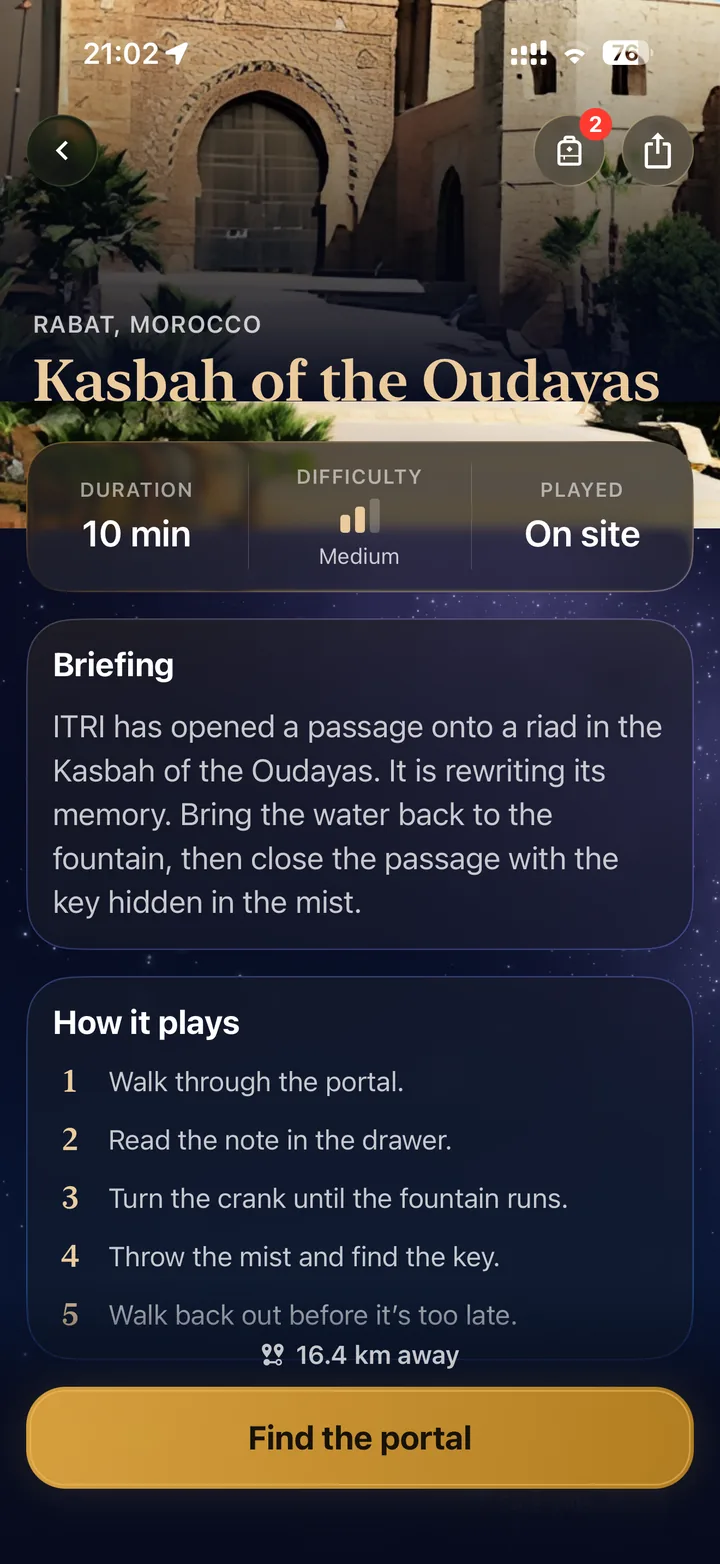
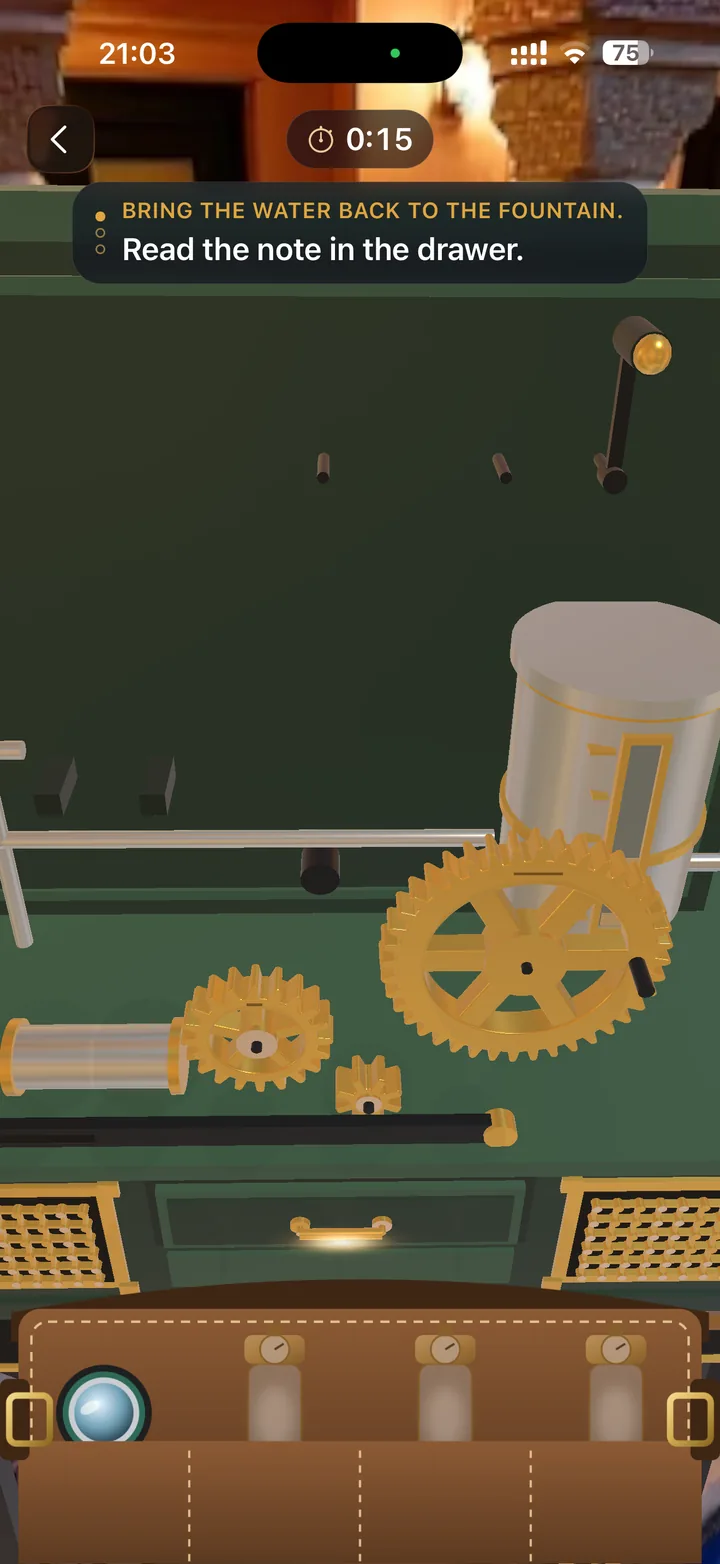
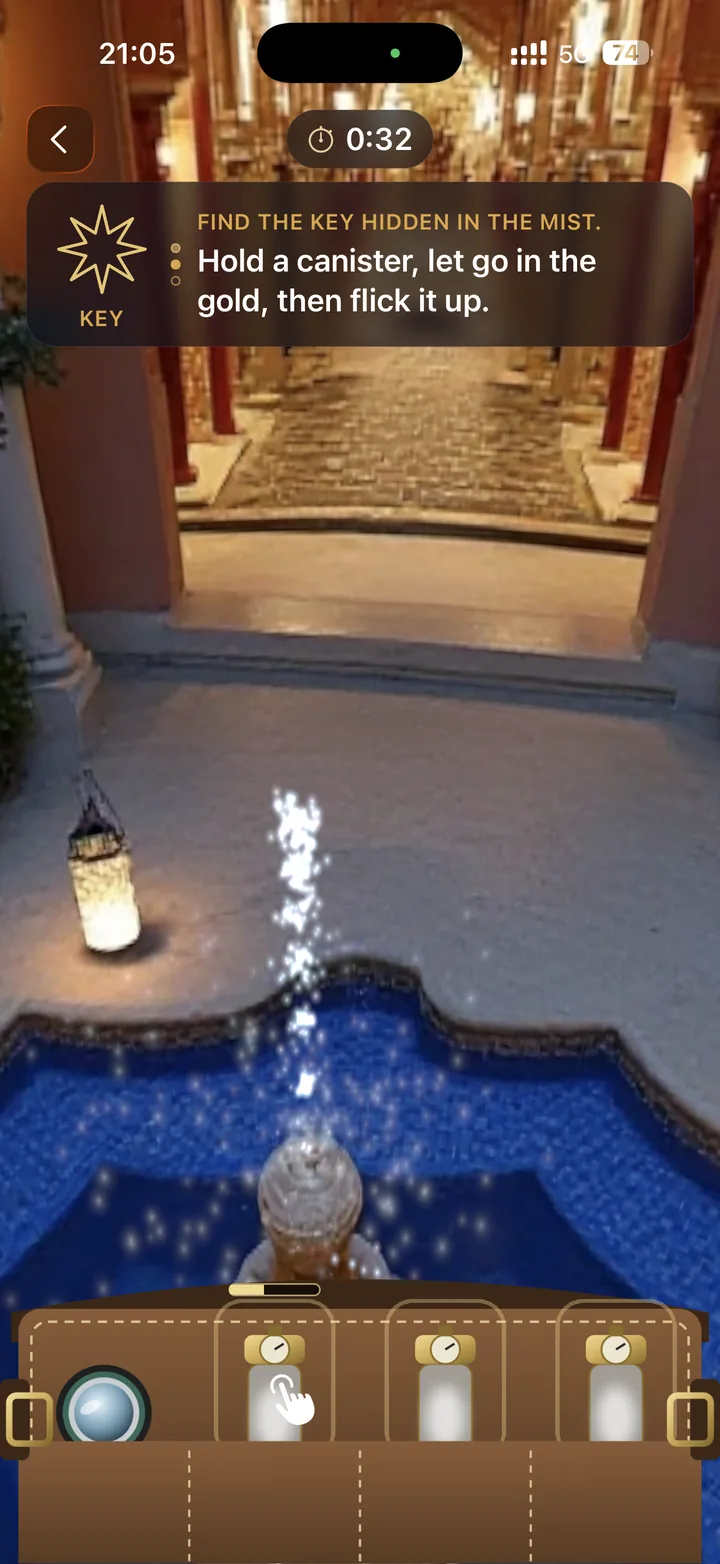
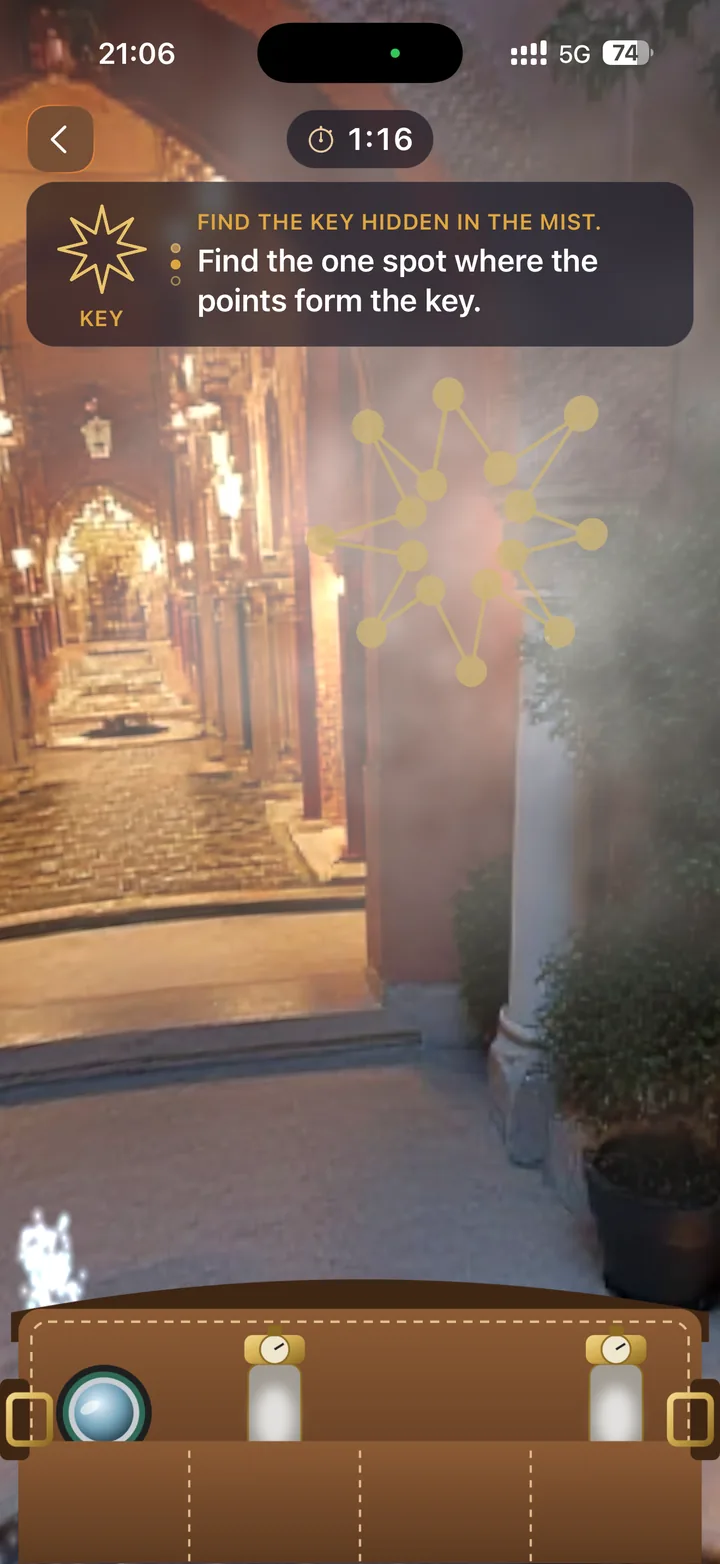
One standout idea came from anamorphosis, the old art of images that only appear from a single point of view. In Amakin it became the seal that closes each portal, which players find by moving through real space. "That's what no flat screen can do: make the real world part of the challenge."
Reda builds with AI tools at every step. Claude Code is his coding agent, and ReactVision's ViroReact MCP server checks every component. Screens, artwork, 3D models and 360° worlds are produced with a mix of design, image and Blender MCP tools, with a backend built on API Platform, PostgreSQL and Docker.
Solving the hardest problem: the dark
The trickiest issue wasn't on screen. On iPhone, ARKit tracking weakens in low light, and a drifting portal breaks the game. Because ViroReact already estimates the light around the player, Reda wrote a native Swift module with the Expo Modules API that switches on the torch when light gets too low. To check whether it is still dark with the torch on, the game turns it off for under a second, measures the real light and turns it back on if needed. The torch button only appears in the dark, and players can always take over.
The results
Amakin won Grand Winner and Best Geospatial AR at Ctrl+Space. The judges were clear about why.
"One of the most complete uses of Portals I've seen someone share," one judge wrote. "I loved how they were utilised within this game... the overall app felt very polished and near releasable. Technically speaking, ViroReact's implementation here is excellent."
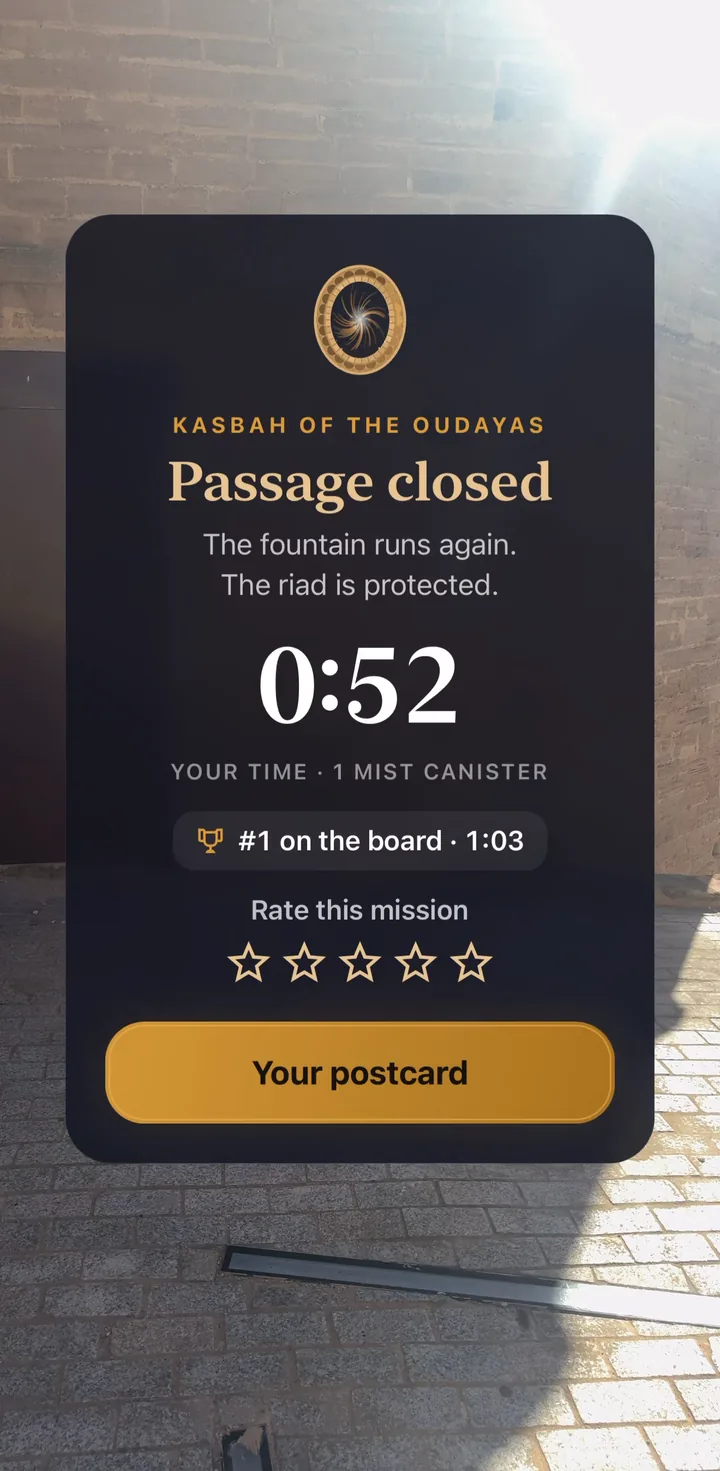
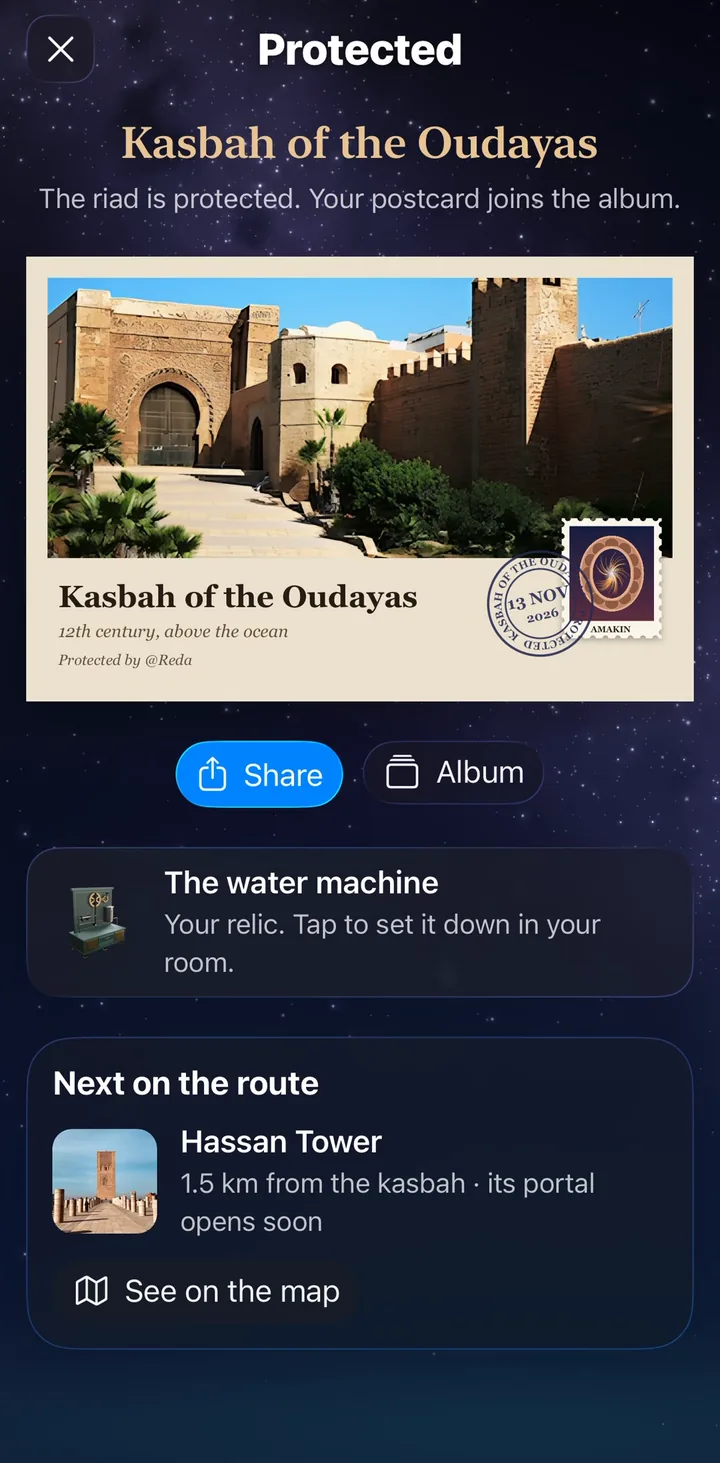
Another praised the smooth interaction after entering the portal and details such as sound, and suggested moving navigation to Expo Router or React Navigation. Reda already had that on his list, and the latest version is built on Expo Router. Since the win he has also added a home-screen widget showing the day's portal and the player's streak, a Live Activity that follows each crossing in the Dynamic Island and on the Lock Screen, analytics with EAS Observe and PostHog, and a shader that brings the sea to life in a daily portal's 360° view.
Support has come from outside the competition too. SMIT Morocco (Tourism Engineering and Investment) chose to back the project, and the waitlist for the public beta is now live at amakin.ma.
"That's what a competition like Ctrl+Space gives you beyond the win: advice from the people who build ViroReact and Expo," Reda says. "It's what I value most."
What's next for Amakin
A public beta is coming soon on iPhone, followed by Android. Its first players will help shape new features and missions. The story never names a city, so Amakin can open anywhere, in Morocco and beyond.
On the technical side, Reda plans to add geospatial anchors to pin each portal to real-world coordinates, recorded environments in ReactVision Spatial to test scenes from his desk, and co-location so two players in the same place can share a portal. Through Amakin Studio, his B2B arm, brands, destinations and events will be able to open time portals of their own. With ViroReact 3 running on Meta Quest, Vision Pro and the web, he also sees a link that opens a portal for a campaign, and AR glasses as "the natural home of a game played on foot."
Advice for developers building AR with React Native
"Start from a need, not from the technology," Reda says. "AR is worth it when it gives people something a screen alone can't, like stepping through a portal into another place." His other lesson: "with React Native and an AI agent, one developer can now ship what used to take a studio. Then put it in people's hands as soon as you can."
Join the Amakin waitlist and find Amakin's social channels at amakin.ma, and follow Reda on LinkedIn and NEXDIGIX at nexdigix.com.


For the short version, see the Amakin case study on our Use Cases page.
Build your own with ReactVision
Amakin shows what one developer can ship with ViroReact: portals, 360° worlds, physics and light estimation from a single React Native codebase. Get started with ViroReact, use the ViroReact MCP server to build with your AI coding agent, and explore ReactVision Spatial to test and host your own spatial experiences.
Frequently asked questions
What is Amakin: City Game?
Which ViroReact features does Amakin use?
Can one developer build an AR game with React Native?
How does Amakin handle low-light AR tracking?
Get the ReactVision newsletter
Product announcements, including ViroReact, ReactVision Spatial, Editor and MCP updates, direct to your inbox. No spam, and you can unsubscribe at any time.